How Startups Use MVPs to Validate Ideas Fast Before Investing Millions

Introduction

Many founders waste time and money building products on untested assumptions. This piece breaks down how validation, minimum viable testing, and real customer behavior help entrepreneurs avoid costly missteps, spot real demand early, and know exactly when an idea is strong enough to pursue.

Around ninety percent of startups fail, and more than twenty percent don’t survive their first year of operation, according to widely cited industry data. The culprit behind many of these failures isn’t a lack of passion or even poor execution; it’s launching products nobody actually wants to buy.

Before pouring hundreds of thousands or even millions of dollars into full-scale development, smart founders are taking a different approach that tests their assumptions early and often. Rather than building elaborate products based on guesswork, they’re using minimum viable products and targeted tests to determine whether their ideas have real market demand before committing significant resources.

startup search ideas lightbulb concept

The Cost of Skipping Validation

Charging forward with an untested idea carries steep consequences that extend far beyond wasted capital. Founders who skip validation risk losing money, squandering months or years of effort, and potentially damaging their professional credibility if the venture collapses. Even reaching the point where investors are willing to listen requires substantial bootstrapping, and discovering too late that the market lacks interest in your solution can derail an entire career trajectory.

The fundamental problem is that many entrepreneurs fall in love with their vision before confirming that customers share their enthusiasm. They imagine how their product might change the world while overlooking whether it actually solves a problem people are willing to pay to fix. This disconnect between founder conviction and market reality is what validation processes are designed to address, and staying informed through industry analysis helps founders understand where their ideas fit within broader market trends.

Understanding What Validation Actually Means

Validation determines whether a startup concept can realistically succeed in the market before any actual product exists. This differs meaningfully from general market research, which simply collects data about an industry, and from product-market fit, which confirms that a real, launched product has gained traction with its target audience.

The validation process gives founders deeper insights into their market, their competition, and individual user behaviors, ultimately informing stronger product development and improving their position when approaching investors. Without this groundwork, even brilliant ideas can stumble because they’re based on assumptions rather than evidence.

Why Traditional MVPs Sometimes Miss the Mark

The concept of building a minimum viable product has become startup gospel, but the traditional approach often leads founders astray in predictable ways. Many entrepreneurs interpret “MVP” as permission to build a simplified version of their grand vision, complete with login systems, databases, onboarding flows, and administrative dashboards—all before confirming whether anyone actually wants what they’re selling.

This overbuilding creates several problems that undermine the validation process. Founders start accumulating technical debt from day one, often spending half their engineering cycles in years two through four just paying back that debt. They get attached to features and infrastructure that may prove irrelevant once real customer feedback arrives. Most critically, they invest substantial time and money into building before truly understanding whether their core assumptions hold up under scrutiny.

Another common pitfall involves mistaking customer politeness for genuine interest. When testers say, “This is great, I could use this,” many founders hear validation, but these lukewarm responses rarely translate into paying customers. Real validation requires pushing beyond generic positive feedback to understand specific behaviors, willingness to pay, and whether the solution genuinely addresses a pressing need.

The Minimum Viable Testing Alternative

Rather than jumping straight to building a product, some experienced founders advocate for testing individual assumptions through what they call minimum viable tests. These tests don’t attempt to simulate the eventual product—instead, they examine whether specific hypotheses that must be true for the business to succeed actually hold up in reality.

The distinction matters because it forces founders to be even more minimal in their initial experiments. Instead of building an entirely simplified car, they’re just testing whether an electric engine provides more power than a gas one. This approach allows for faster, cheaper learning cycles and prevents entrepreneurs from getting emotionally attached to features before confirming basic market demand.

Identifying Your Riskiest Assumptions

Every startup idea rests on multiple assumptions, but not all assumptions carry equal weight. The validation process should prioritize testing the hypotheses that pose the greatest risk to the business model, starting with the most fundamental question: Do people actually want this badly enough to pay for it?
Beyond basic demand, founders should consider execution risk (can we actually deliver this solution reliably?), marketing risk (do we know how to reach and sell to our target customers?), market size concerns (is the addressable audience large enough to build a meaningful business?), and profitability questions (will customers pay enough to cover our costs and generate sustainable margins?).
Listing these risks explicitly prevents founders from dodging uncomfortable truths about their business model. Many entrepreneurs gloss over obvious vulnerabilities because acknowledging them feels discouraging, but identifying weak points early creates opportunities to address them before they become fatal flaws.

Testing Methods That Deliver Real Answers

The most straightforward way to test demand involves creating simple landing pages with email signup forms that gauge interest in a proposed solution. This “fake door” technique costs very little to execute but provides concrete data about whether people care enough about the problem to take even a small action like sharing their contact information.

For more concrete feedback, founders can build extremely basic prototypes that simulate core functionality without the polish or completeness of a market-ready product. A food delivery startup, for example, once tested its operational model by hiring a private chef from Craigslist, taking orders through Eventbrite, and coordinating drivers using game pieces on a physical map—all before writing a single line of code for a proper ordering system.

These scrappy tests accomplish something crucial that surveys and interviews often miss: they force potential customers to demonstrate interest through action rather than words. When people commit their time, money, or attention to an early prototype, that signal carries far more weight than verbal enthusiasm expressed during a focus group.

What to Look for in Customer Feedback

Collecting feedback is only valuable if founders know how to interpret what they’re hearing. Generic praise like “this is interesting” or “I might use this” should raise red flags rather than provide comfort. Useful feedback comes from observing how people actually interact with early versions, noting which features they gravitate toward and which they ignore, and paying particular attention to any friction points that interrupt their intended workflows.

Critical feedback deserves special attention because it highlights product weaknesses that need fixing before launch. Rather than getting defensive, effective founders treat negative responses as free consulting that reveals blind spots in their thinking. Both enthusiastic responses and harsh criticism can inform decisions about which features to emphasize, which to modify, and which to eliminate.

The key is focusing on specific, actionable insights rather than trying to please everyone or incorporating every suggestion. Some feedback will contradict other feedback, requiring judgment calls about which customer segments matter most and which pain points the product should prioritize addressing.

Tracking Early Traction Signals

After initial tests generate interest, the next question is whether that interest persists or fizzles out quickly. Sustained engagement suggests genuine demand, while a rapid drop-off may indicate that the initial hook didn’t translate into lasting value for users.

Founders should monitor daily, weekly, or monthly growth patterns in signups, engagement metrics, and continued interaction from existing users. At this stage, calculating estimated costs for customer acquisition and comparing those figures against what customers are willing to pay becomes critical for determining whether the unit economics can work at scale.

If early tests show that acquiring each customer costs more than that customer will likely spend, something fundamental needs to change. That might mean finding cheaper acquisition channels, raising prices, or fundamentally reconsidering whether the business model makes economic sense. Multiple failed tests pointing in the same direction often signal that it’s time to pivot to a different idea rather than continuing to push against market resistance.

Real Examples of Validation in Action

One cohort-based education platform tested its core assumption by running a single course with a partner who already had an audience, avoiding the need to build marketing infrastructure from scratch. That first course generated over one hundred fifty thousand dollars in revenue and earned high satisfaction ratings, confirming that students would pay premium prices for instructor-led group learning experiences.

The test revealed specific insights about community building, student behavior patterns, and course design that shaped the eventual product. Perhaps most importantly, it helped the founder identify capabilities he personally lacked, leading him to seek out a co-founder with complementary skills he wouldn’t have known to look for without running that initial experiment.

A food delivery startup took a similar approach by using a private chef, Eventbrite for orders, and manually coordinating drivers via text message and physical map pieces. That bare-bones test delivered forty meals in a single night with just two weeks of preparation, proving that distributed delivery operations were feasible even if extremely complex. The company reached one million dollars in sales within six months of launching its actual product, built on the confidence that validation testing provided.

When to Move from Testing to Building

Knowing when to stop testing and start building requires intellectual honesty and pattern recognition. If dozens, hundreds, or thousands of people show consistent interest in early prototypes, sign up for email lists, or demonstrate willingness to pay amounts that cover estimated costs, those signals suggest the idea has real demand.

Conversely, if multiple rounds of testing continue producing lukewarm responses, declining engagement, or resistance to pricing that would make the economics work, continuing to iterate on the same core concept may be less productive than exploring entirely different directions. Some ideas simply don’t have sufficient market pull, and recognizing that reality early saves time and resources that can be redirected toward more promising opportunities.

The validation phase isn’t about achieving perfection or eliminating all uncertainty—startups will always involve risk. Rather, it’s about gaining enough confidence to commit resources toward building something with a reasonable probability of succeeding, based on evidence rather than hope.

Common Mistakes That Undermine Validation

Even founders who embrace validation principles often stumble in predictable ways. Skipping direct customer conversations in favor of theoretical market analysis deprives entrepreneurs of the nuanced insights that only come from talking to real users. Asking leading questions or settling for yes-or-no answers rather than digging into specific details limits the usefulness of the feedback collected.

Another frequent error involves prioritizing “nice to have” features over core functionality during early testing. The goal at this stage is to confirm that the basic solution solves a real problem, not to build a comprehensive feature set that might appeal to different customer segments. Loading early prototypes with extra capabilities makes it harder to identify which elements actually drive value.

Overinvesting in polish and infrastructure before confirming demand is perhaps the most expensive mistake. Founders who build elaborate systems, establish formal company structures, order branded merchandise, or hire large teams before validating their core assumptions are spending resources on things that won’t matter if the fundamental business model doesn’t work.

The Role of Technology in Faster Validation

Modern tools have dramatically reduced the cost and complexity of running validation tests. No-code platforms allow non-technical founders to build landing pages and simple prototypes without hiring developers. Analytics tools provide detailed data about user behavior that would have required extensive manual tracking in previous eras.

Artificial intelligence capabilities are making certain validation tasks even more efficient. Founders can use AI tools to analyze survey responses, identify patterns in customer feedback, conduct competitive research, and forecast potential market scenarios. These technologies don’t replace human judgment, but they do accelerate the learning cycles that validation depends on.

The key is using these tools strategically rather than letting them distract from the core mission of testing specific hypotheses. Technology should enable faster, cheaper experiments—not become an excuse to overbuild before confirming that anyone wants what you’re creating.

Building Validation Into Your Process

The strongest startups treat validation as an ongoing discipline rather than a one-time hurdle to clear before launch. Even after achieving initial product-market fit, continuing to test assumptions about new features, market segments, and growth strategies helps companies avoid costly mistakes as they scale.

This mindset shift requires viewing validation not as an obstacle that delays building, but as insurance that protects against wasting resources on things customers don’t value. The weeks or months invested in careful testing typically save far more time than they consume by preventing false starts and misguided product directions.

Moving Forward With Confidence

Validating startup ideas before committing major resources doesn’t guarantee success, but it substantially improves the odds by replacing guesswork with evidence. Markets evolve, competitors emerge, and even well-validated ideas sometimes fail for reasons that couldn’t be predicted during early testing. The goal isn’t eliminating risk, that’s impossible in entrepreneurship, but rather tilting the probability distribution more favorably toward positive outcomes.

Founders who embrace this approach often find that their validated ideas attract better co-founders, generate more investor interest, and achieve faster initial growth because they’re built on evidence rather than speculation. Companies like Kuchoriya Techsoft specialize in helping startups develop technology solutions grounded in thorough validation, ensuring that development resources get allocated toward features with confirmed market demand.

Latest Blogs

Article Author

PR and Communications Agency,Brand Communications Agency,Strategic PR Agency,Integrated Marketing Communications,Public Relations and Branding Services

Jhon Carl Bonifacio Ignoro

Web Development & SEO Lead

Jhon Carl is a seasoned WordPress Web Developer with eight years of professional experience in building, optimizing, and maintaining high-performing websites. For over six years, he worked with Eversun Software Philippines Corporation, an American-owned, Philippine-based company, where he served as the dedicated Web Developer for IoT Marketing. In this role, he honed his expertise in creating seamless digital experiences and ensuring strong online visibility for global clients.

After transitioning from corporate work, he pursued freelancing and has since partnered with businesses in Australia, the UAE, and the USA, delivering tailored WordPress and SEO solutions that drive measurable results. At FIREWORKS Communications, he leads the development and optimization of the company’s online presence, aligning technical execution with strategic marketing goals to ensure clients’ brands are presented at their very best.

Latest Articles from Cynthia Baker
young business man offering hand for handshake
Public Relations & Media Strategy
Jhon Carl Ignoro

The PR Playbook: 7 Proven Ways to Gain Credibility Fast

Learn 7 proven PR strategies to build credibility, gain media coverage, and position your business as an industry authority. Actionable tips, examples, and tools inside.

PR and Communications Agency,Brand Communications Agency,Strategic PR Agency,Integrated Marketing Communications,Public Relations and Branding Services

Rose Begonia

Director of Public Relations

Rose Begonia is a seasoned PR executive with over a decade of experience helping businesses, from growing startups to well-established organizations, grow their reputations and gain increased recognition both in the press and amongst their customers. She specializes in working with companies in the clean energy, cleantech, energy efficiency and electric vehicle sectors. Rose has helped her clients garner coverage in a number of both industry-specific and mainstream sources from around the world, including Fortune, TechCrunch, VentureBeat, CleanTechnica, Greentech Media, Electrek, InsideEVs and Le Monde. You can connect with Rose on Twitter or LinkedIn.

Latest Articles from Rose Begonia
PR and Communications Agency,Brand Communications Agency,Strategic PR Agency,Integrated Marketing Communications,Public Relations and Branding Services

Aidan Gray Rotunno

Digital Marketing Strategist

Aidan is a digital marketing strategist and creative storyteller with experience working with sustainable organizations to increase their visibility and revenue. His expertise in digital marketing, data analysis and content creation uniquely position him to help deliver campaigns that resonate with target audiences and achieve client objectives. He’s a firm believer in the power of storytelling and its ability to deeply connect brands with their audiences. A self-proclaimed “data geek, Aidan balances his analytical side with a passion for developing compelling content. When he’s not immersed in the digital world, he’s likely hiking local trails or surfing.

Latest Articles from Aidan Gray Rotunno
whatsapp image 2025 09 15 at 11.04.00 47304478

Abhishek Sharma

CEO | Kuchoriya TechSoft

Abhishek Sharma is the CEO of Kuchoriya TechSoft, a global technology company founded in 2009 with headquarters in New York and offices across India, Italy, Brazil, the UAE, Australia, Canada, and South Africa. With more than 700 successful projects delivered in over 50 countries, the company has earned recognition as one of the Top Mobile App Developers in India by Clutch, BusinessofApps, and TopDevelopers.co.

Abhishek also serves as a Director at Kuchoriya TechSoft Private Limited, role that highlights his active leadership in the tech industry. Under his guidance, Kuchoriya TechSoft has become a trusted partner for businesses worldwide, specializing in mobile apps, web development, blockchain, AI/ML, UI/UX, and digital transformation solutions that drive measurable results and long-term growth.

Latest Articles from Abhishek Sharma
fireworks communications cynthia baker

CYNTHIA BAKER

CEO & Founder | FIREWORKS Communications, LLC

Cynthia founded FIREWORKS Communications to provide a full spectrum of Integrated Marketing Services that engage customers during the buying journey and maintain them as loyal clients thereafter. With more complex marketing goals and IoT initiatives from clients, she recognized that a team of Marketing Technologists is needed to assess data and create strategic plans that deliver required results for clients Prior to FIREWORKS, she founded and managed AccoladesPR for twelve years. During that time, she recognized the shift occurring in the marketing landscape and the increased demand for lead generation, brand building, social, mobile and digital services provided by a single, trusted agency.  Cynthia has personally garnered media exposure for her clients in The Wall Street Journal, BusinessWeek, VentureWire, Entrepreneur Magazine, Franchise Times, InsideTelephony and Family Magazine along with a wide array of trade and regional publications. As an international speaker, she shares her perspective on the intersection of Marketing and IoT, Big Data and AI. Her interest in tech trends is demonstrated by her leadership as a co-creator of Interactive Austin and as a co-founder of Social Media Club Austin.  You can find her at times on Twitter, LinkedIn and Facebook and can contact her at cynthia@lightfireworks.com.

Latest Articles from Cynthia Baker
fireworks communications and kuchoriya softtech digital ignition
Partnerships & Collaborations
Cynthia Baker

Partnering for Client Success

Learn 7 proven PR strategies to build credibility, gain media coverage, and position your business as an industry authority. Actionable tips, examples, and tools inside.

PR and Communications Agency,Brand Communications Agency,Strategic PR Agency,Integrated Marketing Communications,Public Relations and Branding Services

Purchase for Only $3!

PR and Communications Agency,Brand Communications Agency,Strategic PR Agency,Integrated Marketing Communications,Public Relations and Branding Services

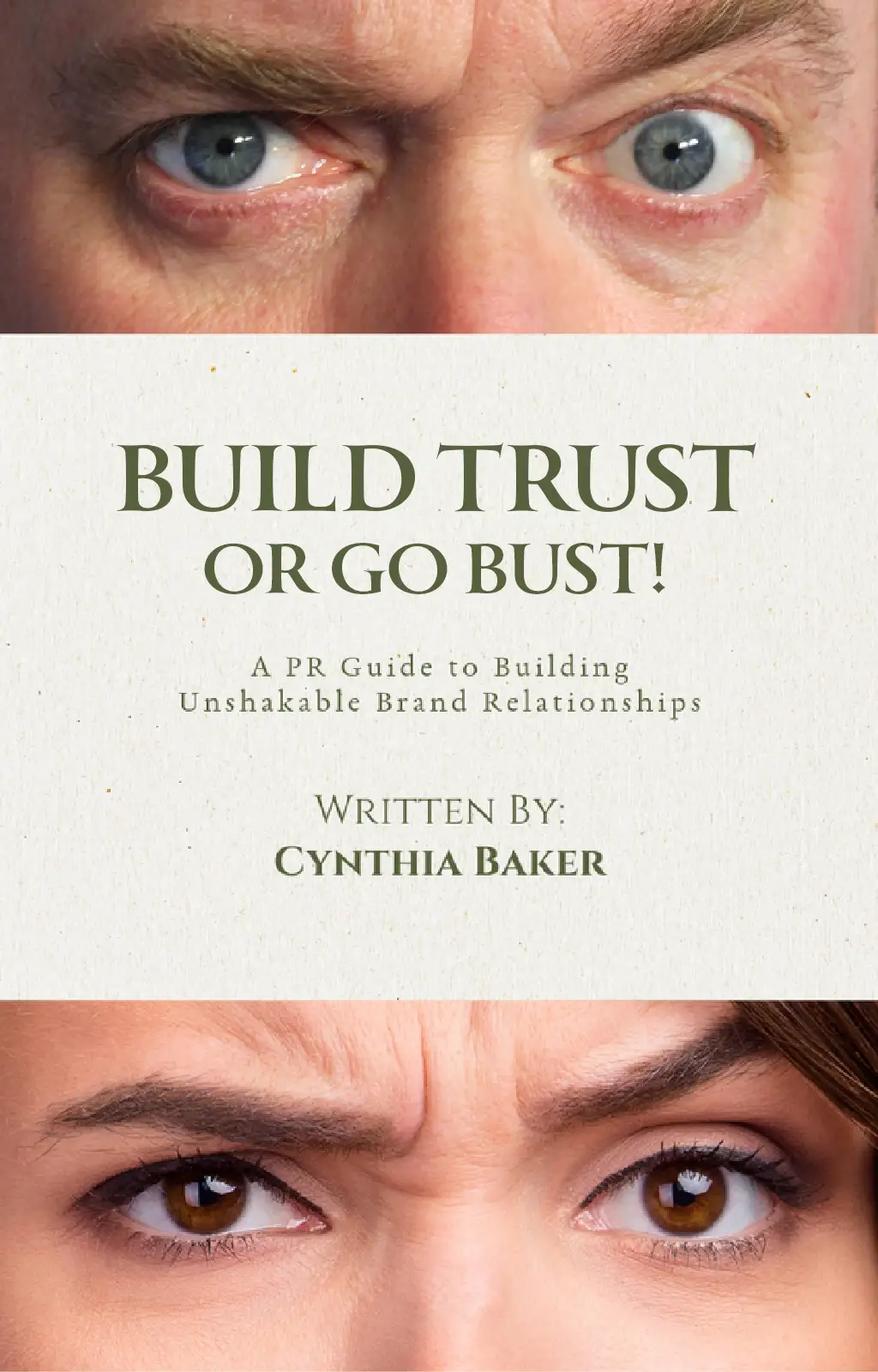
You’ve noticed it. Trust is at an all-time low! Customers simply will not engage until you earn their trust! The current trust deficit is hurting sales, partnerships, and our morale!
The good news? It can be overcome by architecting trust relationships and they can then transform your brand’s trajectory. If you prove that you have a purpose-driven brand that values serving your clients and positively impacting our society, you can gain trust.
Read our e-book and learn how! Understand more about customer relations, case studies, public relations, and honest transparency.

PR and Communications Agency,Brand Communications Agency,Strategic PR Agency,Integrated Marketing Communications,Public Relations and Branding Services

The Dependable Team

...Marketing & PR Experts.

Partnership Mentality

We serve as an outsourced communications firm with full integrated marketing and public relations capabilities.

Our experienced marketing and public relations team provide personal hands-on consulting and execution. We work in tandem with your team as dedicated partners. We are committed to delivering the desired results on time to assure business success.

You don’t get lost in any hierarchy. You work directly with a FIREWORKS team member in charge of the strategy and results so that feedback and customization occur, and we arrive at the best possible solution for reaching your goals.

You can depend on us to report progress on a regular schedule and then immediately plan for the next set of goals and timelines. Our proactive approach and momentum will simplify your participation and allow you to focus on your core business.

PR and Communications Agency,Brand Communications Agency,Strategic PR Agency,Integrated Marketing Communications,Public Relations and Branding Services

The Plan

…with a True North.

Strategic Integrated Marketing Plans

We have a process for evaluating your needs and opportunities for business growth.

We gain clarity on your business goals. Is the prize brand reputation, crises management, credibility, partnerships, lead generation, a community of followers or mobile users? We then develop plans with phased entries into markets using multiple communication channels in order to reach your goal in the long run without breaking your budget in the short term.

After the goals are verified, the rest are just the steps back to now. We will seek the shortest paths for achieving your goals using a combination of SEO, search engine marketing, behavioral analysis, digital marketing, public relations, social and mobile strategies. The True North is the use of metrics that keep us pointed in the right direction to increase site visits, lead generation and new sales.

PR and Communications Agency,Brand Communications Agency,Strategic PR Agency,Integrated Marketing Communications,Public Relations and Branding Services

The Reality Check

...the Past informs the Future.

Site Audit / Market Analysis / Branding & Messaging Review

We listen to where you want to be “when you have arrived,” the assets you currently have in place, the resources available to bring value to your customers, metrics used to track the journey and the paths you have traveled.

And, we listen to your customers – what they say and what they don’t say about you and your competitors. We study your target audiences and use behavioral analysis to determine their interests in the past – the sites they have visited and products or services they are researching in their buying journey.

Then we can predict the future of where and how to articulate your offering and how to best engage with your target customers to keep them in relationship until they make a buying decision.

PR and Communications Agency,Brand Communications Agency,Strategic PR Agency,Integrated Marketing Communications,Public Relations and Branding Services

Mercury Mambo Business Development Case Study

Overview

A Hispanic marketing firm that specialized in event and experiential marketing was finding more competition entering their market.

Objectives

Gain more online visibility online Demonstrate the special competencies of the firm through a company blog Claim a leadership position with corporations who would hire them for their Hispanic marketing expertise.

Strategies

Consulted with the firm on the technical set up and blogging content and strategies of their initial blog site on company culture and projects Guided the firm in the development of blog to showcase the leadership’s knowledge of Hispanic issues and demographics which corporations need to incorporate into marketing plans.

Results
PR and Communications Agency,Brand Communications Agency,Strategic PR Agency,Integrated Marketing Communications,Public Relations and Branding Services

New Era Portfolio Case Study

Overview

A fine art publisher and manufacturer, New Era Portfolio, hired Accolades to develop a social media strategy and implement it for its four different audiences – each with its on Web site. The goal was to sell directly to its consumer audiences online.

Objectives

Build and strengthen relationships with audiences online and sell directly to consumers online.

Strategies

Created strategic social media campaigns for interior designers and Gallery Direct consumers on LinkedIn, Facebook, Twitter, Flickr and blogs, as well as supplementing with traditional PR efforts like optimized press releases and media outreach.

Results

Within three months, the client benefited from the following results:

“Accolades Public Relations was one of the first communications firms in Austin to embrace social media strategies along with traditional PR. When I read of their expertise, I knew they would understand how to integrate our Facebook, blog, Twitter and LinkedIn sites for an effective social media presence. Not only did AccoladesPR deliver the publicity results they promised, the education they provided on social media was invaluable. It has changed the way that we do business online.”


— Joe Garcia, CEO & President, New Era Portfolio

PR and Communications Agency,Brand Communications Agency,Strategic PR Agency,Integrated Marketing Communications,Public Relations and Branding Services

Essential Healthcare Management Case Study

Overview

Essential Healthcare Management had a brand and website presence that did not clearly articulate what the company accomplished for clients. The site was not interactive; it was only a “standing brochure” that was not gaining any organic search traffic.

Objectives

Elevate the brand and increase sales.

Strategies
Results

Accolades was able to substantiate EHM’s image and business value via its website presence.

“Accolades Public Relations helped us to rebrand our company, develop an interactive website and share our thought leadership via blogging and social media. This transformation has helped us to clearly communicate our value to our customers and has had a significant impact on our reputation, reach and ROI. We selected Accolades PR as a strategic partner, because we know they have the expertise in public relations and integrated marketing to help our medical suppliers and healthcare clients effectively grow their businesses as well.”


— Frank J. Ripullo, M.A., Founder and Managing Partner, Essential Healthcare Management

PR and Communications Agency,Brand Communications Agency,Strategic PR Agency,Integrated Marketing Communications,Public Relations and Branding Services

Human Dimensions of Organizations, The University of Texas at Austin

Overview

The University of Texas at Austin launched a new Master’s degree program in Liberal Arts that needed branding, messaging and promotion to the business and student communities in Texas.

Objectives

Communicate the unique advantage of the Human Dimensions of Organizations’ Master of Arts program to prospective students, recruit the first class of students, and engage support from local business leaders.

Strategies

Accolades PR developed strategic planning on a monthly basis, met weekly to coordinate priorities with the Associate Director, and implemented action steps of the integrated communications plan on an ongoing basis.

The PR team worked closely with the Human Dimensions of Organizations staff to develop precise messaging that articulated the value of the program for prospective students for corporations.

The PR firm bridged the gap between the conceptual vision of the program and the business value that the program could bring to Texas companies.

The Accolades team developed thought leadership topics of interest to companies and corporations desiring independent thinkers with a multi-disciplinary approach to problem solving. The pain points of companies that the HDO program could address are around the topics listed below:

Accolades provided marketing support for introductory seminars and conducted media outreach as these events were held in targeted cities across Texas. The team developed core media documents (including fact sheets,) bios, press releases, and targeted media lists to use during this process.

Accolades clearly articulated the potential value and impact the program could have on student careers and companies seeking global leadership teams. Strategic networking and outreach to business leaders and organizations was accomplished on an ongoing basis to Texas business communities.
Cynthia Baker developed key strategic partnerships with supporting organizations and community groups.

Accolades PR introduced potential board members to HDO and guided the board formation. Cynthia Baker worked directly with Phyllis Snodgrass and Susan Davenport to explore ways the Austin Chamber of Commerce and HDO could strategically work together toward common goals.

Results

Within an 8-month period, the client benefited from the following results:

PR and Communications Agency,Brand Communications Agency,Strategic PR Agency,Integrated Marketing Communications,Public Relations and Branding Services

Video Storytelling

If a picture is worth a thousand words, imagine the power of video in telling a brand story. Our video experts will work in tandem with you to discover the best video solution, whether animated, video logs, interviews, presentations, vine or event videos. We will then leverage the brief video segments via social media distribution channels. Our media creation specialist is accomplished in managing photography, video, CGI, and film productions on location or within studio environments.

Want to Learn More? Let's have a chat!

PR and Communications Agency,Brand Communications Agency,Strategic PR Agency,Integrated Marketing Communications,Public Relations and Branding Services

Social & Mobile

Our team consists of experts at setting up, monitoring and analyzing social campaigns. We have also planned and implemented mobile apps for our clients.

Want to Learn More? Let's have a chat!

PR and Communications Agency,Brand Communications Agency,Strategic PR Agency,Integrated Marketing Communications,Public Relations and Branding Services

Digital Marketing, SEO & Advertising

MARKET PERCEPTION RESEARCH

When research is needed to understand market priorities, customer interests and pain points, competitor influences or consumer behavior, we work in tandem with our clients to plan and implement a methodical research process to inform the company on customer perceptions and business needs.

MARKETING PLAN DEVELOPMENT & EXECUTION

Our team will establish an annual plan for lead generation and media coverage as well as a content marketing plan to be distributed via social media channels to build a community of prospects, loyal fans and followers. We will repeatedly develop story angles and pitch them to the media, influencers and industry analysts. Strategic Marketing Plans are crucial for success and need to be customized to fulfill corporate business goals.

GO-TO-MARKET STRATEGY & PRODUCT LAUNCHES

We can research and determine the advantage the product delivers to the competitive industry landscape, update the Media Kit with product specific information and set a program to share that information with the media and key influencers.

MARKETING & SALES COLLATERAL

After a strategic Branding and Messaging session, we can develop marketing and sales collateral that will demonstrate how your product or service will deliver benefits that address the pain points of your customer audiences and deliver value.

LEAD GENERATION & CUSTOMER ACQUISITION

Business success depends on a constant flow of new leads from website, content marketing, media coverage, email and digital advertising efforts. We will assure that the proper strategy and implementation will happen to maximize demand and lead generation.

DIGITAL MARKETING STRATEGY

We understand that each company has unique business objectives and criteria to measure success. We work with businesses to develop and implement data-driven strategies that enhance your digital marketing and increase ROI. Through a combination of hard work, comprehensive use of data, and unmatched project execution, we have helped businesses of all shapes and sizes achieve their online marketing goals.

PAID DIGITAL MEDIA

Our experienced teams of Pay Per Click (PPC) experts are each individually Google and Bing certified across multiple areas of certification. We work closely with each client to define ROI goals and optimizes your campaign variables to achieve those goals. We can provide support for every step of your PPC campaign, from comprehensive campaign management to stand-alone services such as PPC start-up, PPC audit, and PPC training.

SEARCH ENGINE OPTIMIZATION

SEO is simple in theory (findable, unique, high quality new content that users value plus aged, trusted off-page signals), but challenging in execution. There are typically competitive keyword terms and many different companies vying for those terms, some with far larger budgets. Since the early days of Google, we have helped companies both large and small improve their online visibility and generate more organic traffic in order to increase conversions and revenue.

Want to Learn More? Let's have a chat!

PR and Communications Agency,Brand Communications Agency,Strategic PR Agency,Integrated Marketing Communications,Public Relations and Branding Services

Content Marketing

We develop content that serves your goals of demonstrating the expertise of your company – whether website content, articles, e-books or blog posts.

Want to Learn More? Let's have a chat!

PR and Communications Agency,Brand Communications Agency,Strategic PR Agency,Integrated Marketing Communications,Public Relations and Branding Services

PR & Communications

BRAND PROMISE, MESSAGE STRATEGY & THE STORY

Messaging is a critical marketing strategy to create alignment within the organization to articulate the story consistently and in a uniform way. This messaging brings the entire organization in alignment with everyone from the receptionist to the sales team to the tradeshow staff to executives – all describing the company and its value proposition with the same messaging or “elevator pitch.” The power of knowing the voice of the company and how to describe the company, its value and key offerings will help to move prospects toward buying decisions, partners towards strategic relationships and influencers towards engagement. We will refine current messaging for communication channels with supporting proof points to capture the interest of the media, partners, target decision-makers and consumers.

MEDIA KIT

In our digital world, reporters expect to download corporate information and graphics directly from your website as they cover your company in a story. A media kit is needed to maximize accurate media coverage.

MEDIA & INFLUENCER RELATIONS

We will establish and strengthen your credibility as an expert voice with the media and among industry influencers. With a long term, engagement, we can guarantee article placements in targeted publications and/or broadcast media.

NEWS RELEASES

We will identify strategic announcements and accomplishments to be the subject of a news release. We will work with you to establish the pace of releases based upon newsworthy topics, accomplishments and business wins.

NEWSLETTERS

We work to keep your customers and business partners informed on a regular basis of your expertise and industry knowledge in order to spark interest, business collaboration and sales.

THOUGHT LEADERSHIP & SPEAKER PROGRAMS

Being viewed as an expert by speaking in front of the right audiences can increase credibility, increase the sphere of influence and expand your brand reputation. Article placement adds to the reach and the opportunities to connect with the right audiences.

REPUTATION MANAGEMENT

A negative online review or negative press coverage can seriously damage the brand reputation of a company. We develop proactive plans and messaging for companies, as needed, to be prepared with a strategic, on-target response in the case of sensitive or controversial media situations.

Want to Learn More? Let's have a chat!

PR and Communications Agency,Brand Communications Agency,Strategic PR Agency,Integrated Marketing Communications,Public Relations and Branding Services

Branding & Creative

Your brand name, logo and tagline should tell consumers what you do within 30 seconds! We work with you to develop a poignant and memorable first impression.

Want to Learn More? Let's have a chat!